From ‘Energy Transitions’ to ‘Transitions Energy’
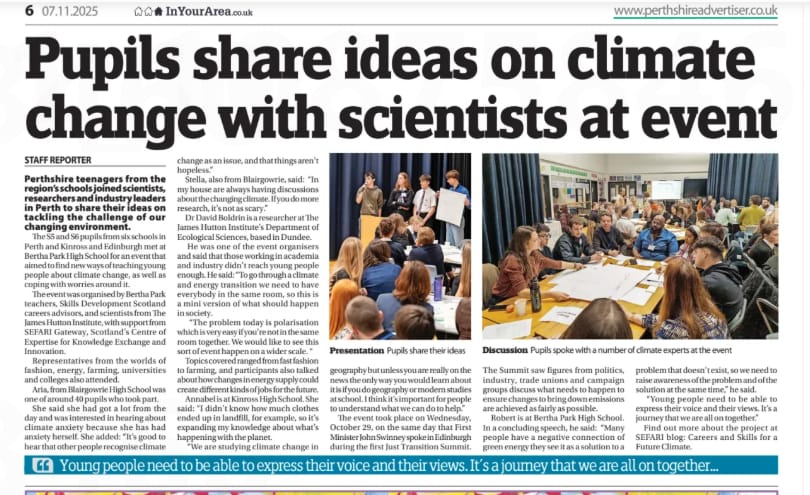
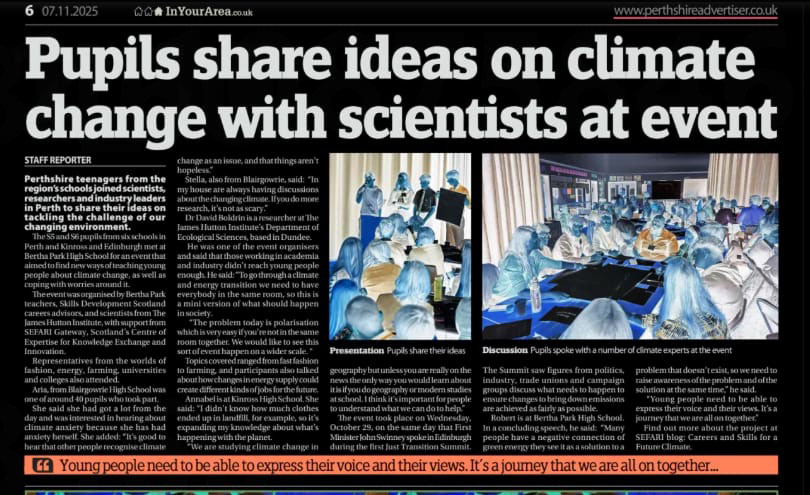
Courtesy of David Boldrin, Hutton Institute
The term ‘Energy Transitions’ describes the problem of how to foster an urgently needed global shift of human activities from dependence on fossil fuels towards renewable, sustainable, and lower environmental impact energy sources, technologies, and ways of life (Achakulwisut et al 2025). As part of its Energy Transitions agenda, the target for the Scottish economy is to have transitioned to ‘net zero’ by 2045. Net zero describes the point at which the amount of greenhouse gases released into the atmosphere is balanced by the amount removed (NetZero 2025). Scotland’s 2045 target has been set by the Scottish government and is five years ahead of the general UK target of 2050 (ScotGov 2019).
As this snapshot makes clear, ‘Energy Transitions’ is a high-stakes and generation-spanning problem involving technical concepts and complex ecological, economic, political, and social stakes at global and local levels. As numerous academic outreach and knowledge-exchange projects indicate, Energy Transitions is a ‘wicked problem’ in relation to which academic, economic, and political stakeholders face pronounced challenges to justly and inclusively engage education systems and institutions. These issues include: how and whether the topic should be included on school curricula; how to provide robust models for teachers engaging the topic; which age groups should be targeted; which subject areas are best suited to engage the topic; which climate change-related issues should be covered under the topic’s umbrella (Jorgenson et al 2019).
Transitioning ENERGY: How the ENERGY Project Underpins our Activities
Three energetic processes have informed the design of ENERGY’s impact activities: transduction, catalysis, and localising. Our work has:
- Transduced (that is, converted energy from one form into another) by, for instance, putting workshopped concepts and outputs from our Digital Museum to work while broadening their accessibility and range (see Image).
- Catalysed new practices for engaging ‘Energy Transitions’ as a broad general educational issue affecting all pupils.
- Localised by supplementing and providing a mutually-beneficial focus for the distinctively ‘localising’ approach of our partner Localising Philosophy
Constellation Whistler
Localising ‘Transitions Energy’: Our Activities
Localising Philosophy’s focus since 2021, in tandem with ENERGY’s focus on Energy Transitions, has been Educational Transitions. Specifically, the project’s remit has been to extend the benefits of art and philosophy to young people undergoing the transition between primary/elementary and high school, with a focus on themes of connection, change, and place in the world. Localising Philosophy has social purpose through the widening of access to the benefits of philosophy and arts education at its core. The project involves ‘localising’, not in the sense of ‘narrowing’, but in the sense of ‘hitting home” and ‘familiarising’, and it involves a broad, accessible and inclusive sense of philosophy: exploring big questions together. Art is the bridge that holds this work together, providing what we call ‘collaborative occasions for imagination’. In this sense, the practices of Localising Philosophy are meaningfully different from other established approaches to outreach and knowledge exchange in both STEM (Science, Technology, Engineering and Mathematics) and STEAM (Science, Technology, Engineering, Art and Mathematics) (Smith 2026).
A key insight from Localising Philosophy’s longitudinal work is that moments of transition provide excellent opportunities for young people to meaningfully explore big questions that matter to them. This is because such moments occur: 1.) collectively, to all pupils, but in different ways; 2.) at a period of abatement from the normal of the strictures of the curriculum, that pupils themselves experience as ‘between’ and ‘transitional’. Building upon these insights, the impetus behind connecting Localising Philosophy and ENERGY is clear: while Localising Philosophy provides ENERGY with a ‘pathway to impact’, ENERGY provides a novel set of tools, concepts and resources for approaching ‘Energy Transitions’, not as a ‘wicked problem’, but as a ‘big question’ that can be explored collectively, in terms of a general experience of shared existential change, connection and development – that is, in terms of powerful ‘Transitions Energies’.
Activities from April to November
Localising Philosophy’s core activities take place April-Nov each year, with work across a full cohort of transitioning final year primary school pupils in a local high school cluster. For the 2025 iteration, Localising Philosophy benefitted from, and was enhanced by, ENERGY insights and resources. Our work took place across the following programme:
- May (8 x in-class workshops, across four primaries, 2 per primary, 200 pupils).
- June (3 x group activities and collaborative cross-cohort artwork as part of secondary school transitions visits, 160 pupils).
- November (8 x in-class workshops with the pupils in their new secondary ‘world’, 160 pupils).
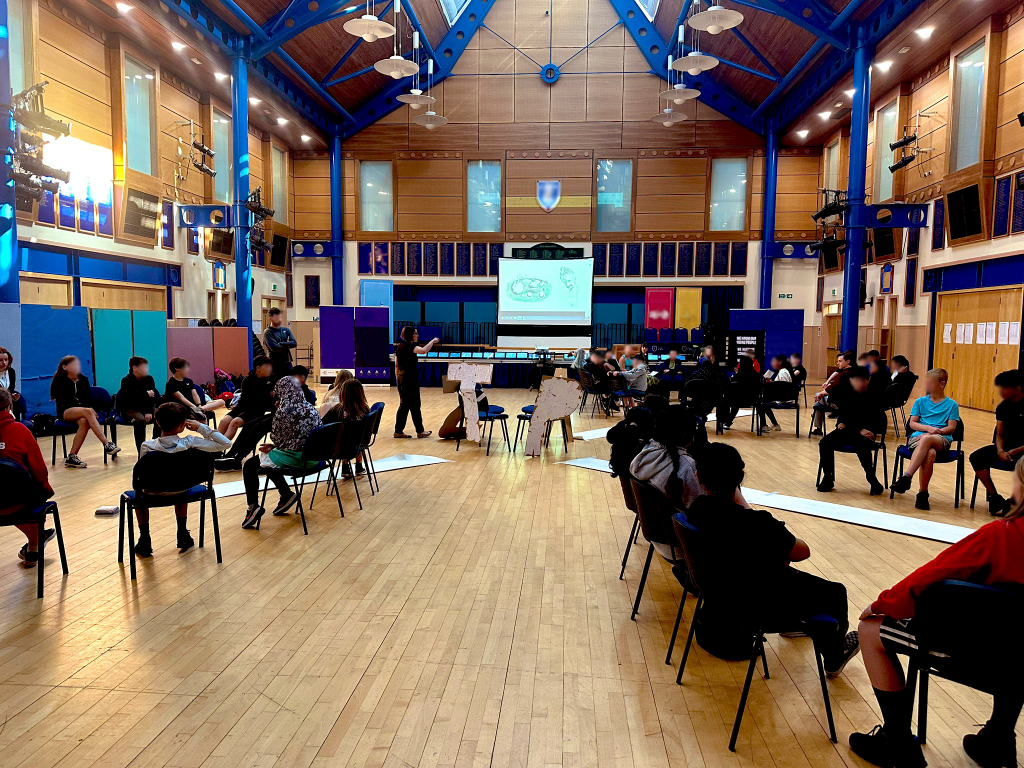
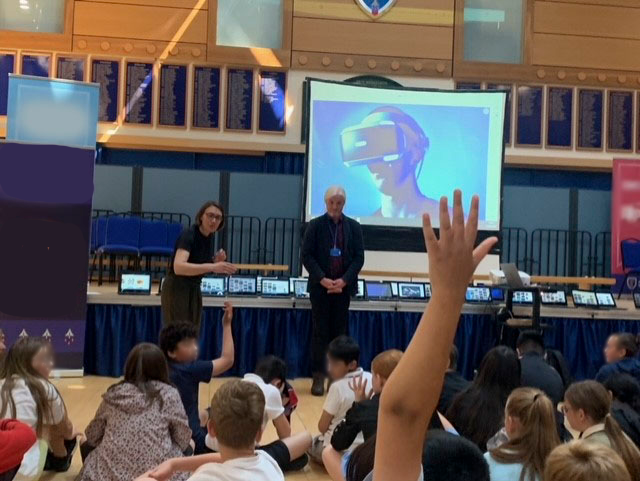
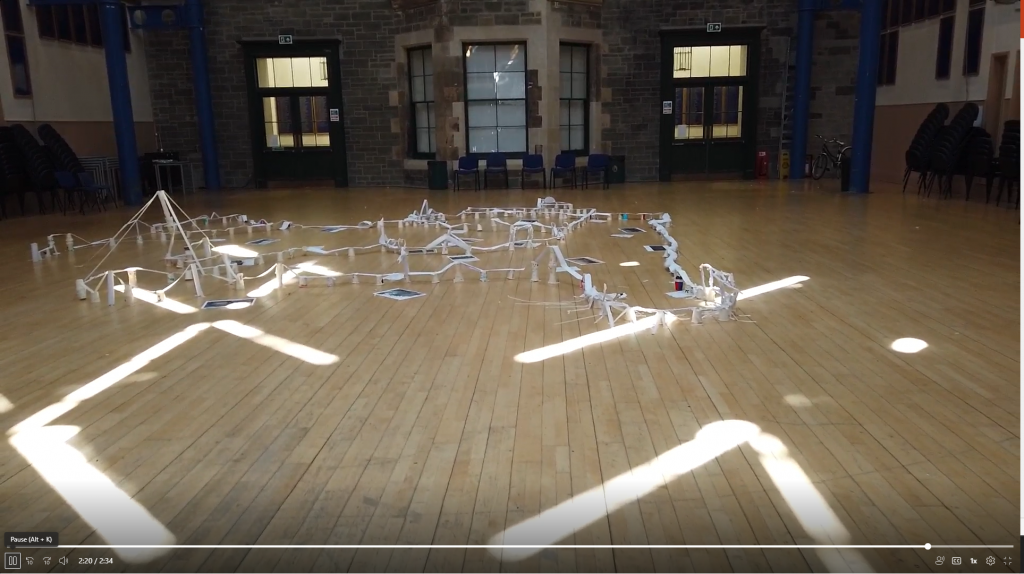
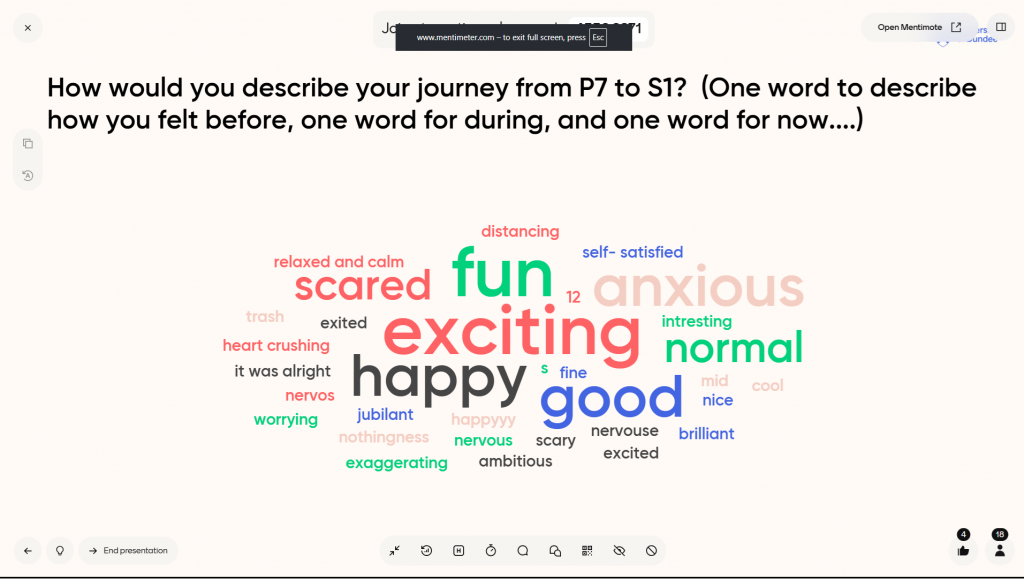
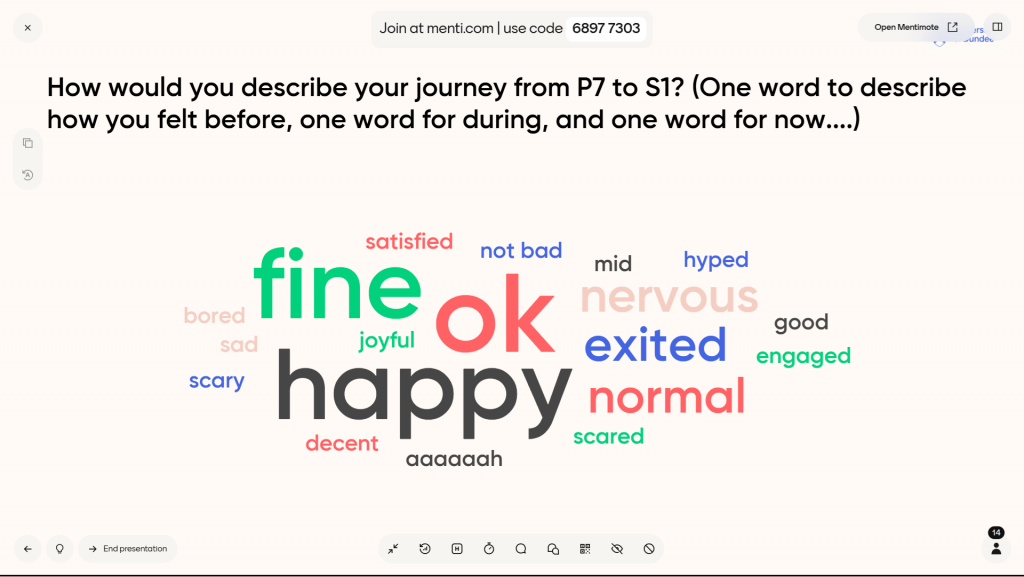
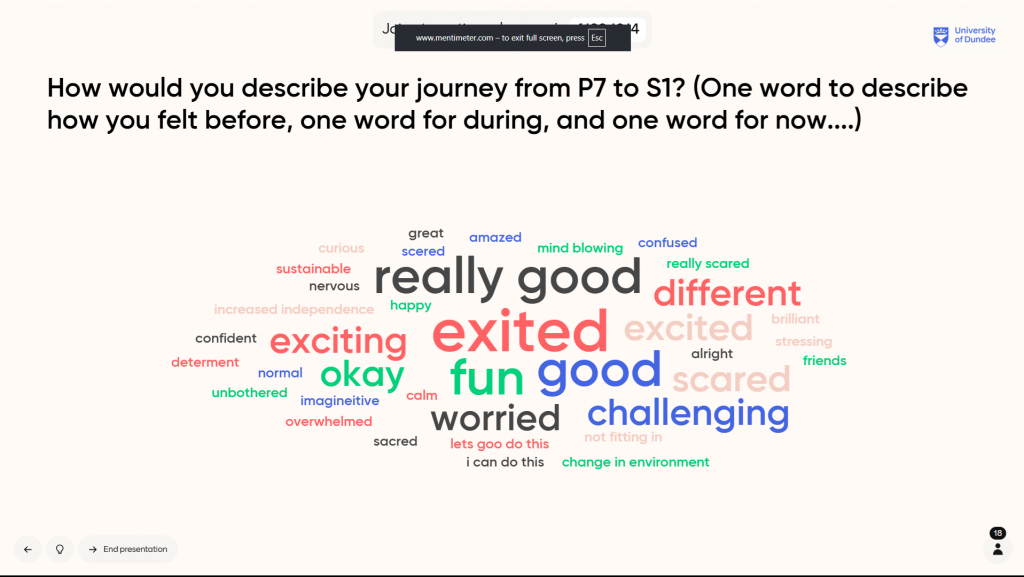
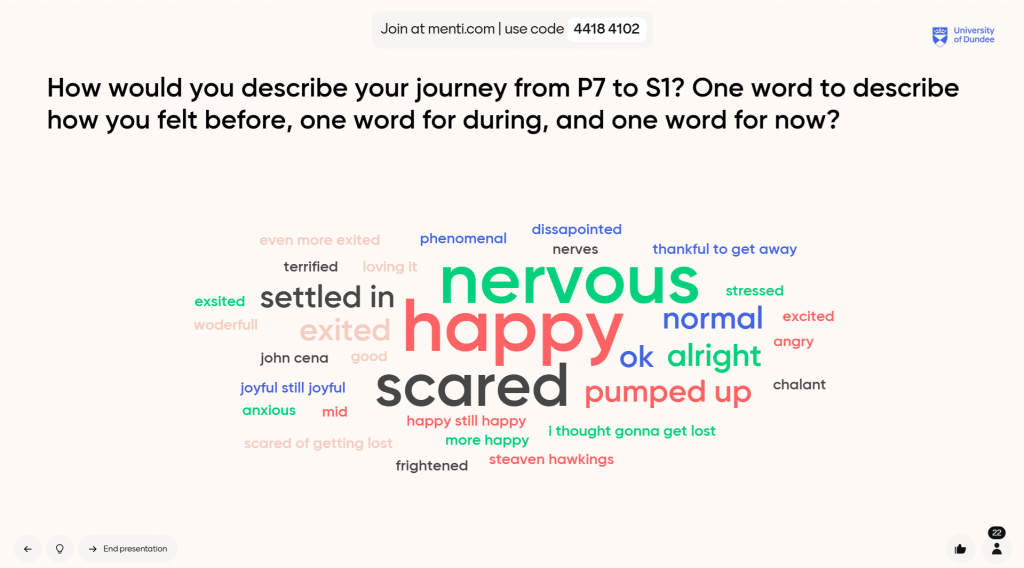
In May, pupils were introduced to philosophy as a practice of ‘exploring big questions together’, and to art-making as one such mode of exploration. In June, pupils pooled their creative energies to make a ‘bridge world’ sculpture involving contributions from all pupils in the year group (see Image above, where each recyclable cup stands for one pupil). In November, drawing on work towards ENERGY’s Digital Museum, the workshop groups reflected back on philosophy as a practice of ‘exploring big questions together’. The groups then explored the status of ‘Energy Transitions’ as an important ‘big question’ today; this involved pupils researching Energy Transitions and posting their key impressions on the concept (see Images). The groups then watched a video exhibiting and refreshing the collectively produced June artwork (see Images). We concluded the workshops by collecting and reflecting on pupils’ impressions of their overall transitions experience from primary to secondary school (see Images).
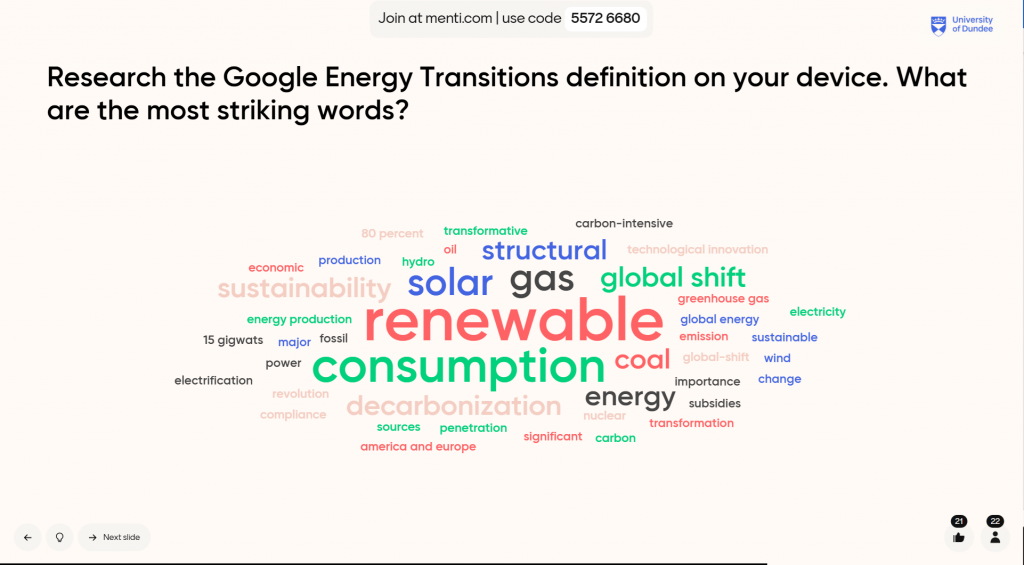
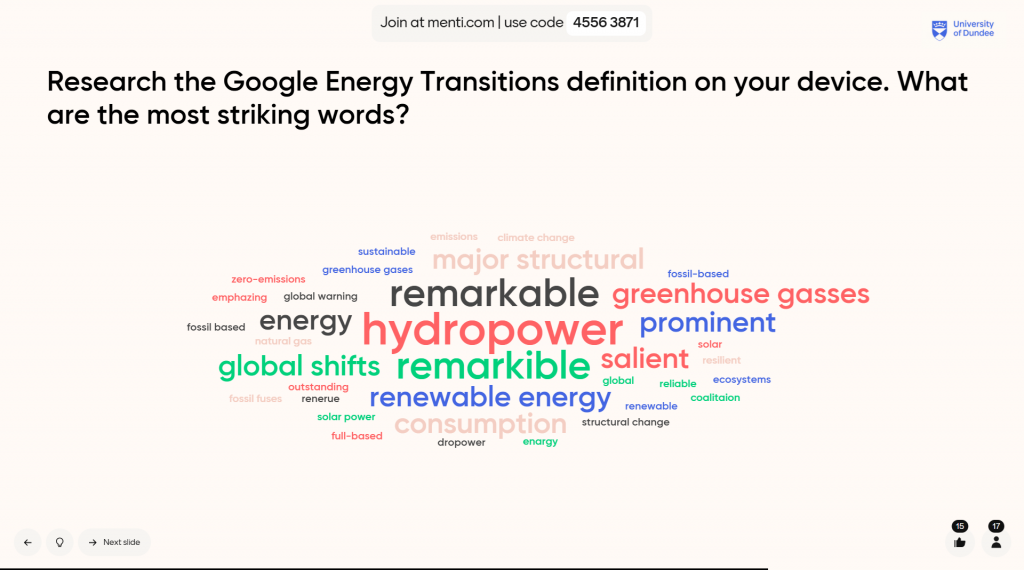
We find these data and feedback to indicate the capacity of young people to engage complex emergent issues collectively, with the kind of shared and reflective emotional intelligence and literacy that adults might reasonably take as a translatable and exemplary model for conduct in different areas of public life (for instance: workshops on Energy Transitions for acutely affected sectors of the economy). We have shared these findings with colleagues engaged in STEM-facing Energy Transitions education at the Hutton Institute (Sefari 2025), and are in dialogue to enhance and bridge our 2026 offerings in shared and mutually-beneficial ways.
Teacher and Student Intern Testimontials
In addition to pupil Transitions Energies as expressed in the above November 2025 data and feedback, student interns/teachers involved in the project commented:
Testimonial # 1
‘I found that this project was one of the most professionally empowering and personally rewarding opportunities I have gained through the University of Dundee. Furthermore, I know it will be beneficial to have evidence of working with young people in their schools for any further professional opportunities. As a final note, it was a delight to see these young people keenly engaged with the difficult concepts we were bringing to them and to see that they retained so much of the information we gave them at our final session.’
Testimonial # 2
‘[The project] teaches [pupils] to listen, react, and create through the interesting lens of philosophy which is something different from what they are used to doing at school, meaning it is new and exciting. This also makes it the perfect vehicle for exploring connection and learning from each other.’
Testimonial # 3
‘Thank you so much for coming in! I was taken back by just how intelligent, respectful, and kind our pupils are. Their memories and knowledge brought me so much joy. You created a fun atmosphere where pupils where safe and valued. Due to this you had pupils sharing thoughts with the whole class who normally struggle with even small group discussion.’
Testimonial # 4
‘I think it brought out a lovely side of my young people and it was so good to see them engaging with Philosophy as a subject rather than just with me as their teacher. They’ve been talking about since you guys visited and they have lots of questions to write about – when I did my summary lesson on Philosophy with them one of the questions was “what is one Philosophical question you still want to ask?” and they had way more answers than I expected! I thought the pace was great, no one was rushed and there was a lot of thinking time, and I felt you and the team interacted with the kids in a supportive manner that built their confidence to attempt answering questions.’
Our aim for enhanced 2026 iterations of our workshops is to build on these documented transitions energies. In doing so, we recognise that we are all stakeholders in ‘Energy Transitions’ as a big question to be shared and explored together, and that this is especially the case for generations to come and those that will have achieved maturity by 2045/2050.